
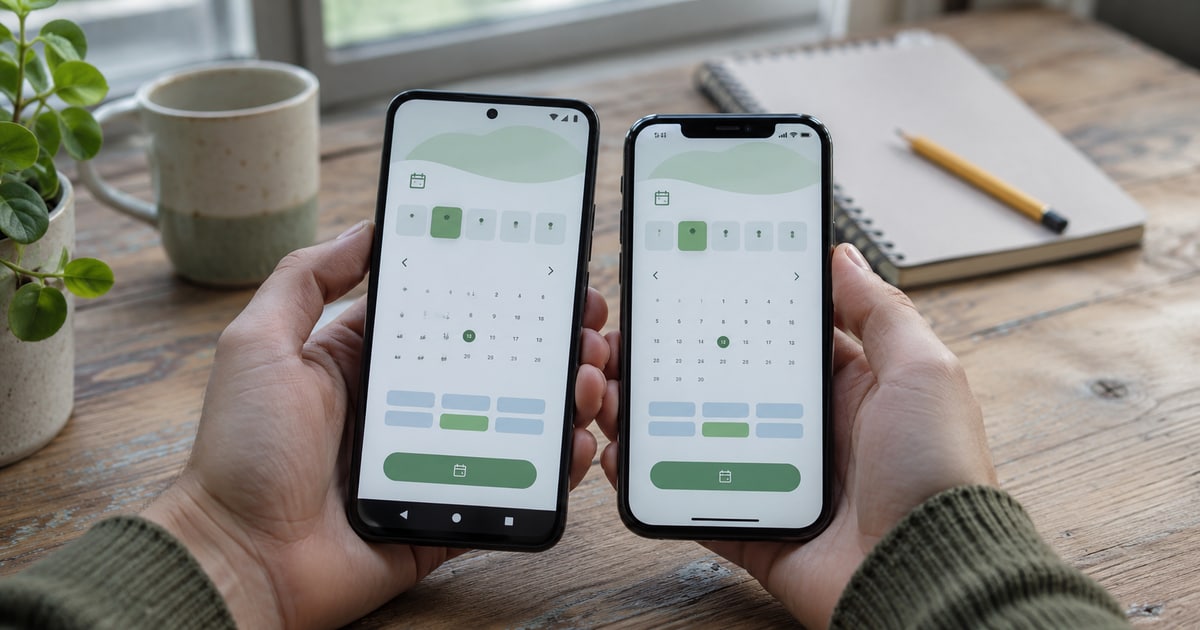
React Native Apps: Practical Benefits for Your Business
Learn what React Native does, when a business app is useful, and what to agree before commissioning Android and iPhone versions.
Quick answer
React Native helps teams build Android and iPhone apps while sharing parts of their work. It is worth considering when customers return regularly, such as repeat shopping or booking appointments. Its suitability and cost depend on the features, implementation and ongoing maintenance.
What is React Native? A simple explanation
Imagine an appointment business. Customers need to see available times, book a slot and find their booking later. React Native is one tool a developer can use to build that experience. It is not a ready-made business app that already contains your booking rules.
It uses native interface components, including controls, images and text fields. Android and iPhone versions can share parts of their implementation, while their differences still need design work and testing.
When does an app serve a real need?
Start with the customer’s task. A weekly shopper, someone tracking orders or a person making repeat bookings may benefit from a shorter route. Someone who only needs your address once may see installing an app as extra work.
These are suggested situations to investigate, not sales forecasts. Ask customers which repeated task is difficult and make that task easier in the first release.
- Reordering a previous purchase
- Finding personal bookings and records
- Checking an order without calling
The main benefit: shared work across two platforms
Shared implementation can let a team make some changes in one place. Appointment availability rules, for example, may be shared between versions. This can help coordinate development and maintenance, but it does not establish a fixed saving or automatically halve the price.
Camera access, payments, maps or specialist integrations may need separate configuration. Ask which parts are shared, which require platform-specific work and who tests each version.
Phone features still need to be implemented
Notifications, camera access and partial offline behaviour need explicit implementation. Choosing React Native does not mean those features already exist. Request a testable example of each feature you actually need.
For bookings, agree what happens when the connection drops and how duplicate submissions are handled. Also discuss personal-data access, account deletion and data storage before the build starts.
What should be agreed before a contract?
Our recommendation is to keep the first release small and usable. Instead of a long feature list, describe one complete journey: the customer enters, completes the main task and receives a clear result.
Agree separately on distribution, app-store accounts, support and later changes. If the product relies on demanding processing or unusual hardware, test a prototype on real devices before committing to the approach.
- Essential features and excluded work
- Ownership of source code, accounts and access
- Tests on real Android and iPhone devices
- Responsibility for fixes and updates after release
Start with one real problem
Rather than asking for an app like a famous brand, describe the problem: “Customers call to find previous orders; I want them to see those orders themselves.” That gives design, estimation and acceptance checks a clearer purpose.
If you do not yet have repeat users or a defined need, improving the mobile website may be the better first step. React Native is a way to build an app; the reason to build one should come from your business.
Frequently asked questions
Is one version enough for every phone?
Parts can be shared, but Android and iPhone releases still need separate checks. Screen sizes, permissions and some features differ.
Will the app automatically work offline?
No. Decide what data stays on the device and which actions are allowed without a connection. Final order or booking confirmation generally needs the backend.
Can a website simply become the same app?
Putting a site inside an app wrapper is different from designing a useful app experience. Login, permissions, payment and the main customer task need review.